
I Know Why I Do This. So Why Can’t I Change?
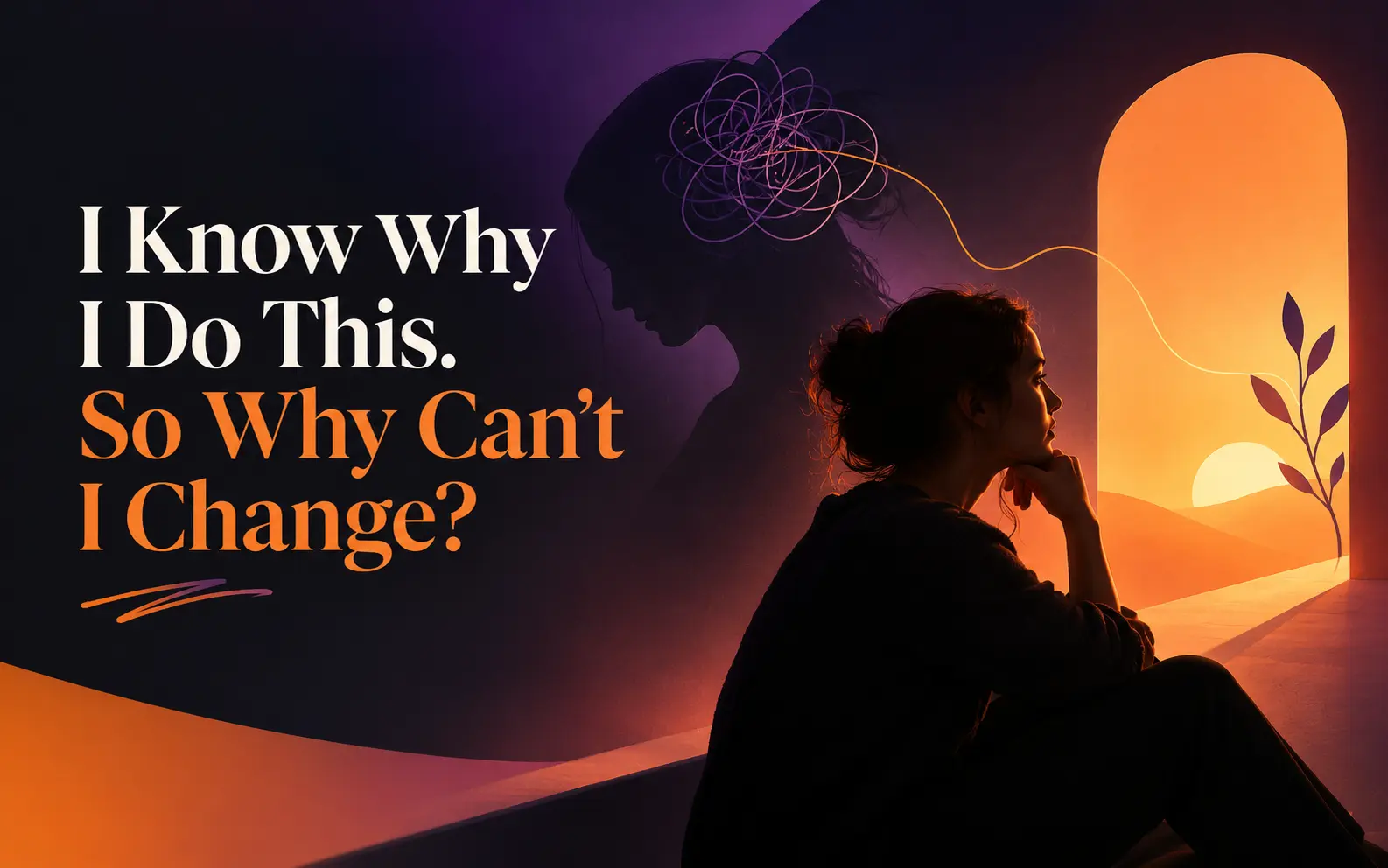
"Ever wonder why being self-aware isn't enough to stop old habits? Discover the difference between intellectual insight and emotional processing, and how to reclaim your power of choice."
There is a unique kind of frustration that comes with being highly self-aware.
You understand exactly why you react the way you do. You know where your patterns started, you can identify your triggers, and you can intellectually explain why a specific situation sets you off. And yet, when that situation happens again, you find yourself responding in the exact same, frustratingly familiar way.
This is the moment many people begin to wonder why understanding isn't enough to create change.
The uncomfortable truth is that knowing something and changing something are two entirely different processes. While intellectual understanding can map out where a pattern came from, it doesn’t automatically mean your nervous system has accepted the experience, processed the emotion, or learned a new way to respond.
The Trap of Overwhelming Experiences
When we face a situation that is emotionally overwhelming, traumatic, or entirely unknown to us, our immediate instinct is survival. We focus entirely on navigating the crisis, giving little thought to its long-term impact on us. We just want to cope—to deal with the situation on hand or somehow find a way to survive.
The problem is that once the crisis passes, your nervous system may continue relying on the coping strategies that once helped you feel safe. Your body can hold onto that strategy, using it like a script long after the original threat has vanished.
Knowing Is Not the Same as Accepting
We often mistake logical comprehension or factual understanding for emotional acceptance. True acceptance requires something much heavier: a willingness to acknowledge the parts of an experience that do not fit neatly together.
Human emotions are messy, and two conflicting things can be true at the same time:
- A parent may have loved you and still deeply frightened you.
- Someone may have done great things for you while you simultaneously felt humiliated or helpless around them.
- You can love someone deeply and still need to build a massive wall of boundaries against them.
- You can make a decision that is 100% right for your life while accepting that it will hurt someone else.
Acceptance doesn't ask you to judge which feeling is "correct." If you resented someone you loved in a particular moment, that feeling isn't a permanent indictment of your character or theirs—it was simply the reality of that moment. Acknowledging it isn't about justifying what happened; it is about allowing yourself to recognize your reality without judgment.
Your Patterns Aren't Broken; They Had a Purpose
The human mind rarely develops a persistent, painful pattern completely at random. A behavior that feels toxic today may once have helped you obtain safety, acceptance, connection, or predictability.
Take people-pleasing, for example. A child doesn’t randomly wake up and decide to sacrifice their own needs. If they repeatedly learn that things are safer when the adults around them are happy, keeping others happy can become their armor. The same applies to conflict avoidance, chronic overthinking, withdrawing, or hyper-controlling your environment.
The behavior may eventually become unhelpful, but it was never pointless. It is an old solution to an old problem.
Understanding what a behavior used to do for you is infinitely more useful than simply labeling yourself as broken.
The Story Beneath the Facts
You can know the cold, hard facts of your childhood perfectly and still miss how they shaped your internal wiring.
You might know that affection was withdrawn during a fight, or that you had to walk on eggshells. But the deeper question is: what did those experiences teach you about your worth?
Perhaps silence began to feel like an impending catastrophe. Someone else’s anger began to mean the relationship itself was dying. A delayed text message today triggers the same panic as abandonment did twenty years ago.
We don't always develop fears because a specific tragedy occurred. Often, we develop them because of how our younger, resourceless selves interpreted those experiences at the time. That interpretation can persist even when your adult circumstances change entirely.
From Intellectual Insight to Emotional Processing
A person can explain their trauma beautifully in therapy and remain completely disconnected from the actual emotion. Saying "I was scared" is not the same as letting yourself feel the terror.
When a painful experience is too heavy, we distance ourselves from it just to keep functioning. That protection was necessary then, but over time, protection can become a prison.
Emotional processing is not simply about "getting emotions out." It involves revisiting those memories with the resources and safety you have today, sitting with the grief or resentment, and allowing the emotion to be acknowledged without judging yourself for having it.
Healing Isn't About Changing the Behavior
This is where the mainstream definition of healing falls short.
If someone works through their relationship patterns and ultimately decides to go back to their ex, it doesn't mean their healing failed. The outward behavior is secondary. The real victory is the presence of choice.
True healing doesn't mean your fear completely vanishes. It means:
- You can feel terrified of a boundary and still set it.
- You can feel raging anger and consciously choose how to express it.
- You can help someone because you genuinely want to, not because you are terrified they will leave you if you don't.
Sometimes, healed behavior looks exactly the same on the outside, but the internal experience is entirely different. Healing means fear is no longer the one making the final decision.
Putting Down the Battles That Aren't Yours
Life will always bring natural struggles—grief, disappointment, and tough decisions. Healing cannot protect you from the human condition.
But it can protect you from unnecessary struggles.
We waste enormous amounts of energy managing how others perceive us, fighting battles that belonged to an older version of ourselves, or denying ourselves basic comforts. Even something as small as refusing to make yourself a fresh cup of coffee because "you're too busy"—while happily making one for someone else—reveals a deep-seated belief that your comfort must be earned.
Part of healing is learning which burdens are actually yours to carry, and which ones you are finally allowed to put down.
You Are Not Broken
A response that makes life difficult today may once have helped us manage something that felt impossible back then.
That does not mean we have to keep living through the same response forever.
We may not have been able to choose what we learned, but with awareness, emotional processing, and practice, we can begin to choose what we do with it now.
Perhaps one of the quieter signs of healing is not that you never feel fear, anger, or uncertainty. It is that when the familiar situation arrives, there is a little more space between what you feel and what you do.
And in that space, there is something that may not have been available before:
Choice.
Sometimes, that is where change begins.
Create Your Space for Choice
Moving from intellectual understanding to deep emotional processing requires a safe, compassionate, and entirely non-judgmental environment. If you are tired of fighting old survival patterns alone and are ready to safely unpack your responses, let's explore them together.
Ready to Begin Your Healing Journey?
Connect with Kamya Kukreti for personalized counselling and compassionate emotional support.
Book a Session